Monday, 16 September 2013

Initial thoughts on military equipment


One of the certainties of  dying empires and collapsing civilizations is an increase in violence of all kinds; from organized to unorganized, state and non-state based, small to large scale etc. As a logical outgrowth of this trend I expect Australia's military to both increase in size (even if it's only relative to the economy) and importance both domestically and internationally. Since the military will need drastic retooling and is likely more willing to undertake practical steps to prepare in the face of overshoot than most institutes (the US navy is willing to pay $400 for algae biofuel). As it stands, militaries often have a major role in creating technologies (including organizational tools) that then spill over into the civilian world. From that, I think one of the overlooked options for adaptation is fostering a technological/social change from within the military alongside more mainstream organizations. Besides its both a challenge and one of the ultimate tests of quality design, military equipment has to perform optimally under a variety of adverse conditions.

So, the key challenge for militaries that will be looked at here, is that of adapting their physical stock of goods and their support network (which includes manufacturing) to an overshooting world and to the post-peak world. Importantly, the changes that will happen will be from a certain perspective minor but from others major, it's also incredibly easy to overstate the effects they'll have. Militaries will still use guns, it's quite likely for automatics to survive (machine guns certainly will), and vehicles (when around) will still have the same overall design (that doesn't mean they won't be different, likely they'll be smaller, slower and lighter). Navies on the other hand will change their main method of propulsion to sail, but their armament will still include guns (a few missiles will likely exist) and chances are they'll still be mono-hull, have radios and computers inside them, probably mechanical like the dreadnoughts of old did. It's harder to guess how aircraft will go, here the change is likely to be drastic; from ultralight solar planes, more airships and a variety of new designs (here's an example), though they'll still use guns, bombs and missiles/rockets. So it isn't a complete overhaul of the armed forces, not like what happened when guns superseded swords (though it should be noted, that change took centuries), this is simply adapting and changing what already exists to a different context.
  
The smaller details will change (and these matter), of logistics, manufacturing, performance, reliability, maintenance and so on. The overall strategies and tactics in which the equipment is used will change in response, which will drive shifts of their own alongside the increased difficulty of logistics. And military equipment is placed under far more adverse conditions than civilian equipment is and with overshoot the conditions will probably get worse with less wealth available for maintenance. So a big driving force will be the necessity of making the equipment easier to maintain, produce, support logistically and still function under high stress conditions (This is an area is which Russia is much more prepared for than the US and is one of their traditional strengths). Then their is the whole array of the equipment cycles, the manufacturing, disposal, material life-cycles and so on, along with new design trends/ideas (such as integrative design) that are partly driven by overshoot, including ones that aim to increase material efficiency/productivity.

One of the most important elements of the (modern) military is logistics. How do you feed, cloth, equip, house, move soldiers and their equipment and so on, without this no action can be taken and the military falls apart.With fuel supplies dwindling and economies contracting, all aspects of logistics will become harder and any military action will become more difficult and as a  likely result leading to the use of smaller military forces than currently used (whether they will also be 'lower tech' is more uncertain). The problem is, gun based armies require more support (even war bands and raiders have this problem) than sword based armies but reverting is only an option if no one else has guns. So armies will shrink by necessity (also due to other factors such as budget and manpower shortages) alongside creating a driving force to optimize logistics, cutting what's sent logistically and producing equipment that requires less support. It'll be an interesting engineering challenge, since by it's nature logistics requires a whole systems thinking to simplify (since it is a system rather than a component), but it has to contend with the fact that each component has to operate at a high performance under stress. One of the insights behind whole systems thinking is that optimizing parts in isolation can be counter-productive to optimizing the system, so those are not exactly aligned goals.

Another area that needs to be looked at is manufacturing since this area does determine quite a bit about the military. One area, that merges with logistics, of preparation would be preserving the metric system since it drastically simplifies logistics while increasing the output and reliability of manufacturing. Before a standardized measurement system, the factory that each cannon came from had to be tracked, since only parts and ammo from that factory could be used for that cannon, yes it was a major hassle which is why militaries drove standardization. So focusing on this area and keeping the advantages of current industrial practice should be a focus for military preparations. If this is done, then it will be simple to have different manufacturing systems working alongside each other, such as (wind or hydro powered) factories, local blacksmiths and the in-between systems. Otherwise, pushing for more domestic manufacturing and for those industries to adapt, militaries can have quite a bit of influence in that regard, is another major preparation.

Biomimicry is an area that could easily yield impressive improvements for the military (and civilians as well, but more on that later) and its a fairly broad area, but I'll simply talk about the material side of things. To give you an idea of the impact this field could potentially have, body armor is currently significantly more complex and expensive than weapons so it would be straightforward to assume that body armor will disappear or become even more restricted. But artificial nacre (mother of pearl) can now be mass produced, though it lacks some of its natural counterparts traits, and artificial spider silk is now in production and CSIRO is looking at artificial bee silk production, all of which could bring down the expense of body armor. Standard materials follow whats known as the 'heat, beat and treat' model for production, which is very expensive energy wise, while bio-materials can be quite tough while using relatively miniscule amounts of energy. A similar transformation would happen in the chemical industry if a cheap way to copy or design enzymes is ever found, suddenly ammonia could be made at room temperature at a high rate allowing a pseudo-industrial agriculture. So suddenly body armor has become cheaper than weapons or not that much more expensive, possible even in a post-peak future. Importantly, these materials aren't dependent on petrochemicals and are often made from fairly common substances and with energy requirements that could easily be supplied by renewable energy.


 The idea of copying natural materials but producing them in a non-agricultural setting is a fairly recent idea, serious attempts started around the 1980s through it's probably older than that. What's happening now is that the conceptual & prototyping stage is ending and the implementation/commercial stage is starting, these are decade long processes so it will at least take 10-20 before the replacement of conventional materials becomes remotely noticeable. And entering military service could take even longer since the materials have to prove themselves and have a solid production base. The fact of overshoot will either increase that time, or halt the process. In practical terms, if the military wants to capitalize on the possibilities of biomaterials, starting some long-term projects in the next 10 years would be the best bet. Success means that quite a lot of advantages appear, such as ultralight tank armour that could radically reduce heavy tanks fuel consumption, or something similar with planes. Obviously, this is a long term project and while one of the key attributes of biomaterials is their incredibly low energy consumption, building the production capacity to satisfy military needs will be costly enough so any advantages for the civilian world will have to wait for a stabilization period to be fully realized.

The other aspects of biomimicry should also be looked at.  Whether it's looking at how fish swim to improve water based transport, copying man o'wars to make unmanned surface vehicles or how mussels dig to radically improve (100x more efficiently) the digging of offshore platforms. All of those are current projects, there are many more in the pipeline and even more that are possible. They simply have come a bit late and could use the sort of R&D capabilities the military has demonstrated in the past since what's going to be lacking in the future is the capital to implement these changes and replace current stocks with these new materials and processes. One of my books mentions a new impeller based on natures spirals that is 30% more efficient than the best practice today, the main problem with implementation is simply building the production capacity and replacing everything. Same with phytomining(also known as biomining), it's a great ecotechnic technology but without massive effort, it will take a long time for it to filter throughout the mining sector. Militaries have shown the ability to develop these sort of technologies, and they do offer the promise of helping ease us along the downside of overshoot.

Now, the problem with developing these advances in an overshooting era is that even if their perfectly viable and developed, the ability to create & distribute them is limited. So even if the military successfully develops and deploys them, chances are they won't spread into the civilian world as fast & comprehensively as previous technologies have. Their simply won't be enough factories, resource and so on. So even if synthetic silk becomes cheap (energy wise included), most people won't have access to it. Mind you, once the process of overshoot is finished and the human world has recovered this won't necessarily be true and it is worth attempting simply for the chance that the future eco-technic societies can have these benefits.

Inevitably, equipment breaks down (or is shot at) and needs to be either repaired or discarded and replaced. For consumables (food, ammo, fuel etc), that can only be discarded once used, so most concerns are in reducing their consumption or finding better storage techniques for transport. The big concern which has only been looked at fairly recently is what happens after a product has been used, the end of it's life-cycle. Here the ideas of cradle-cradle and upcycling are important, since they deal directly with the end phase of a products life-cycle and what comes next. First their is the separate technical and biological nutrients, the first cycles through the techno-sphere endlessly (ideally) while the other can disposed of safely into the biosphere (say via composting). They need to be easy to separate, so components will normally be either entirely technical or entirely biological nutrients, but hybrids are quite possible with proper design. So most military consumables that are used in the field should be biological so they can safely be left in the ground or alternatively used for bio-energy. If on the other hand the containers can be easily kept, they should be easily refillable and the possibility of using technical nutrients should be looked at, especially if  they could be used in the bases machine shops. There's a whole lot more but this should be the starting point for anything which is going to be disposed of instead of repaired, though this will still be a secondary consideration to capability.

An example of the segregation of biological and technical nutrients is exhibited by the books Cradle to Cradle and its sequel Upcycle. The first book is a Durabook, which are made from plastics and uses a special ink. Basically its tough, waterproof, has no adverse affects on the enviroment or health and can be continuously recycled, it is simply melted down and the ink skimmed off before reuse. The book Upcycle is an entirely biological nutrient, it contains no toxic materials at all and is completely compostable, you could leave it on the ground and its materials would safely assimilate into the enviroment.  Logistically speaking, biological nutrients are easier for an army to dispose of for most field consumables (they can simply be left on the ground at worst). Otherwise most equipment will be only technical nutrients with some hybrids.

Dealing with the military equipment which needs to be repaired is another issue. While I don't know enough about military equipment in detail, I imagine that most of the good practices are used. Having easily swappable parts, building in durability and so on (some of these were pioneered by the military). Here the main principle is figure out how best to simplify equipment without too many tradeoffs, and when tradeoffs need to be made where the balance lies, so that repairing is both simpler and quicker. Having shared components, even when it creates inefficiencies, could also be useful as it simplifies inventories and allows for both more and easier scrounging. Otherwise it's as simple as making equipment (ranging from tanks to guns) easy to take apart and replace parts as necessary, though a provision for fixing the parts (like a base workshop) should be considered. Radical redesign probably isn't needed, most of the equipment could easily look and function similarly to modern counterparts and while there will be a lot of work involved, most of it will likely be in the production chain, smart redesign and material choices. the best case is that capabilities are actually enhanced, through the most likely outcome is a they are party; reduced.

The other issue with repairing equipment is who repairs it and how are they trained/accommodated into the military structure. Military bases in friendly areas could rely on civilians for some of the repairs, making use of local blacksmiths or workshops, but this obviously doesn't work if their not in friendly territory, their are no civilians (at least ones with the relevant skills) or the base is in a war-zone and everyone else has left. The best case would be the soldiers repairing their own equipment with hand tools and simple machines, that's quite achievable for most of the equipment a soldier carries but won't always be possible, shovels and radios are easy enough, aiming lasers, not so much. So chances are any bases that have more complicated equipment (vehicles of any kind for example) will have dedicated technicians and full-scale workshops. Smaller bases could potentially benefit from 3D printing and similar technologies in that regard.

So, that's an initial look at military equipment. There are quite a few more topics, but this is enough for now.

Monday, 9 September 2013

Integrating 3 production modes

In the resource scarce future there is going to be a pressing need to properly integrate and optimize the various industrial modes available. An important point first; the question of "which mode is the best mode?" is the wrong question. Or more precisely,  the right question is "which mode is best in context X for the production of product Y?" and before you can answer that you have to answer what context X and product Y is and how the various modes interact with them. So if someone simply says "factory production is best" without context they are wrong, equally if they say "artisanal production is best" they are also wrong, unless they specify the context and product first. Values, how efficiency is defined, overarching goals (beyond making the product), capital available and so on are all important considerations, without them the context question can't be answered. So when I say a factory is efficient, I probably don't mean its efficient at making jobs (they normally aren't) or that they produce a range of products and benefits (varies), but they do benefit from economies of scale and in the context of a reliable transport system they're the most efficient production mode in terms of input/output. If the value of providing jobs is low, then a factory can make sense, if the value is high it probably doesn't. There is no one right answer, which is why it's important to integrate and optimize them all rather than focus on one mode.
An example of a contemporary mismatch is American warplane production. This was in an article I read a while ago, but its a good example of what not to do. American warplanes are made by specialized teams and everything is done to not use assembly lines and factory production modes (meaning they use a form of artisanal/workshop production). Since the point of warplane production is to produce warplanes cheaply and en mass, this isn't the best way to do it (it is however the best for the companies making the warplanes as they can earn more money, and for small elite air-forces that don't export planes). The US can get away with it because no one else had as advanced technology, they have a ridiculous amounts of money compared to everyone else and no one who they've fought could have built those factories. Mind you, now that China and Russia are becoming more powerful/technologically savy and the US is slowly decaying, this is less true case and will be less so in the future. All that stops it now is the ridiculous overcomplexity and other problems of modern warplanes, not necessarily a problem of future planes.

So lets categorize the different production models into something that we can talk about. Instead of doing the hard work myself I'm going to copy-paste the model from here.

"Now, the fundamental building blocks of industry in Clockwork Empires are these:

The Factory: A large building full of whirring machines and toiling workers. It takes in one set of “commodity” (in our design vocabulary, a generic name for any resource or good in CE’s economy) inputs and produces one particular commodity output. Factories require a lot of infrastructure, have very specific inputs and outputs, but they’re the most efficient means of production.

The Artisan: A home/shop run by one skilled craftsman, like the baker, butcher, or candlestick maker. (Note: Clockwork Empires will not contain candlestick makers as they’ve been made obsolete by scientifical clean-burning Perfectly Safe gaslamps.) Artisans are small and slowly produce specialized goods. And they will almost certainly be put out of business by the factories you get around to building. Yay, progress!

The Workshop: A sprawling, crude, generic production facility which cover a broad categories of industry (e.g. metals, woodworking, ceramics). A workshop take in a relevant set of commodity inputs and outputs any possible product that can be made with those goods, but far less quickly and efficiently than a Factory and somewhat less than an Artisan. The point of building a workshops is to fill in gaps in production chains, for example because you badly need some giant cogs, metal plates, and muskets but can’t afford to devote a factory to each separate commodity yet."

Now, the thing to remember here is that this is a bit crude. Factories don't necessarily have one specific output, one factory I visited in the Mekong Delta had the input of rice and through wood heat and human muscle produced rice paper roles and a local rice bar snack (it was quite nice), while the waste was used in construction. Mind you, that factory was quite close to being classified as a workshop, but the point stands. And the chemical industry, which could in the future expand with bio-refineries and the like, should be categorized in a very different way. And artisanal production doesn't only make specialized goods, it's just the main feature. But its a start and we can start looking at how this could work in the future.

Also, just to be clear, factories will exist in the future just as they have existed in the past. I have a book, "Delizia" about the history of Italian food and it mentioned that 400-600 years ago, there was a pasta factory in Naples (I believe it was water and muscle powered). Also the assembly line was used for the production of Venetian ships, most of the basic components of factories are old and don't require fossil fuels. And Industrialism was started by wind and water power, along with pedal, tidal and a few others in minor roles, and those power sources aren't going to disappear. In fact more power sources have been added, solar and biofuels (biogas is quite useful in that regard) for example, so the future existence of factories is not in question. Their role and relative importance is however. Workshops and artisans are the same, the question is not will they exist, but what role will they play and how important will they be. And in the future, 3d printing, hacker spaces or factor e-farms might lead to more categories or production modes, chances are they won't eliminate the existing categories but add to them and change the overall system. And if molecular/nano assemblers are built into a self-sustaining system (not very likely, but possible) then they'll add more.

So if all these various categories will exist, what is the best way to use them all at once for all the various contexts and situations future societies will face?

Now, this is a point I've mentioned before, but that's because it's an important point, that of the changes and benefits brought about by the metric system, which is a standardized and universal measuring system. Before it was almost impossible to have any two blacksmiths in the same town, let alone in different regions, make a part to the exact same dimensions. As long as the metric system stays, it would be trivial to have two blacksmiths in separate countries making parts to the same dimensions. So straight away the main obstacle of integrating any production system over a geographical area has disappeared completely, having a common standard and language (unless it has only one specific meaning, a unit of measurement isn't shared across languages or even neighboring areas). The main reason interchangeable parts didn't appear far earlier than they did was simply the lack of a standard measure which could ensure parts from one factory were the same as parts from another factory, not a lack of energy or other technical skills. The machines (like turret lathes) came later, you could easily have an interchangeable parts system with craftsmen who use hand tools now, it just isn't as worthwhile when you have factories to do so. Possibly instead with the metric system and a strong enough bureaucracy to manage sit you could easily have a system of interchangeable parts from craftsmen with hand tools, it just currently isn't worth it when we have modern factories and mass production

What this means it that not just the production side needs to be considered, but also the repair and logistics side. Also, it means that while specialized goods can come from far away, if certain guidelines are followed then local or regional capabilities could repair and maintain them. So, for example, most soldiers gun's could be produced in a factory, but when needed a local blacksmith or workshop could create replacement parts or cover shortfalls in production as needed. Since the different production modes aren't making things to different standards, they can make the exact same things if necessary for servicing or production. Additionally the end life of a product needs to be thought of and planned for, is it composted, recycled, used as raw material in another industry or are the broken parts simply replaced continuously. So the actual product isn't so important (it should still be considered) as much as the context the product exists in and is to be used in.

Military production more often favours the factory model, it even invented most of it (assembly lines and interchangeable parts started for military production), because the values are almost always (can vary for certain societies) a high throughput, cheap production cost per part and a high volume of production. Quality can vary depending on the force structure and military culture, in WW2 both America and Germany had the same problem with their torpedoes, Germany instantly fixed it while it took years before the Americans even acknowledged that the problem existed. Outside of feudal or very poor societies, and even then it's still likely, the bulk of military production will likely be done by factories. That doesn't mean that the other modes won't be used, most military bases will have workshops for repair and maintenance  and the use of local artisanal labour will certainly be common, but they won't be the most important mode of production for military goods.

Civilian goods and production systems vary a lot more, for the simply reason that the values and context vary. Do you want to save labour, energy or capital? How important is quality? What volume of production is needed? What are the political and regulatory implications? And so on. A village will likely only use artisanal production and maybe one workshop, but the goods it buys will likely be made in a factories or workshops, so transport is another issue, along with where the good is going to be used. Chances are most manufactured goods will be produced by all 3 modes and the mixtures will vary. For example, most tools could easily come from factories, most machines will come from workshops, while high quality versions of both are made by artisans. Or the basic tools (hammer, shovel etc) are made in factories while more complex ones (like drills) are made by artisans and workshops creating a variety of machines as needed.

The overarching industrial system of the future will be very complex.

Monday, 2 September 2013

Lessons from Australia's history

Historical analysis is useful for understanding the broader (and sometimes the not so broad) patterns of human societies.Some patterns are universal enough that they can be applied to almost any human society and can be expected to happen when certain conditions are met. Overshoot and empires are a good example, most civilized societies (as in the presence of urban centers) have had empires or empire like behavior and even hunter-gatherer tribes have gone through overshoot at one point or another (see the die off of large animals outside of Africa), the first trend is restricted to certain civilization types while the latter is endemic to all. Then there are ones that are more specific and are more restricted, such as anacyclosis or most tribes being in near continuous war.

Anacyclosis is specific to societies with a democratic tradition and for state societies war is more often the exception than the rule whereas for tribal societies it is the opposite. And then there are the patterns which are restricted by geography and/or climate, the simplest example is the divide between East and West in Eurasia. Ever since Darius invaded Greece (and most likely earlier) that line has been set in stone and it shows no sign of moving, it is almost entirely a product of geography. There are also hybrid patterns, that are a mixture of geography/climate and societal type, a typical one is the relationship with the coast which depends on shipbuilding abilities and land based transport as much as the coast itself.

The purely geographic and societal approaches can easily be used to analyze the possible future of Australia, but a combination cannot be used easily. Yes, the Aborigines have been in Australia for 50,000 years and managed the landscape for their own use, but they never founded cities, had the wide range of crops and animals we now have and had a very low social complexity. Different societies interact with their geography and climate differently, mainly it depends on their subsistence methods, and so how current Australian society interacts with it's geography over the scale of centuries to millennium is mostly unknown. We can guess some of it from similar situations elsewhere, such as how the coastal nature and shipbuilding interacts, but otherwise its unknown. The main lessons can be seen from how Australia has been populated in the past and how colonization went. 
http://cookt.ism-online.org/files/2010/11/aus.png

To the left is a map of Australia's population distribution. That pattern on the map to the right is likely to stay roughly the same for the foreseeable future (though likely with a more even distribution due to a movement of the population away from the capital cities and into rural areas) due to geography. The gap between WA and South Australia for example is due to it being a desert (think the Nullarbor plain), not because of an  arbitrary decision. The reason for most of the country being white (or effectively uninhabited) is that it is simply uninhabitable for even slightly significant population densities, calling it a wasteland is fairly accurate. Its the sort of environment that only hunter-gatherers can use while being self-sufficient. The parts that show up on the map are the places that are nice, fertile and habitable by city based societies. It isn't an accident that the population is based around the south-east coast, those parts happen to be the nice fertile areas. Same with the north coast being lightly population (you can just barely see Darwin on the map), it is entirely due to the enviroment and there isn't anything that could really change that and make the north coast populous in any relevant time scale (it could see a population rise due to increased cross strait trade but nothing significant). Same with almost the entire west coast, most of Australia can't support agricultural societies and horticulture societies are likely to do only marginally better (and only in parts of the north coast). The idea of running to a remote part of the country and homesteading may make sense in America, but here in Australia it runs into the fact that most of the landscape is hostile to anything but hunter-gatherers and the parts that aren't hostile are generally not remote and already settled. While their are some areas where this is possible and it has been done, it would quickly run into problems if it ever became even remotely popular. The idea of copying the swag-men and becoming mobile is a far better idea and has worked before in Australia's history.

Nomadic herders and other non-agricultural societies that aren't hunter-gatherers may well work in the future there, but as they haven't existed yet, we can for the moment assume they won't. Elements of those societies have existed, see the stock men of the outback, but not as a fully separate cultures. This suggests that some form of such a society will exist but it could be deeply connected to the more populous city based societies by necessity, this connection however is necessary for those societies to be significantly more technologically capable than the stone age.

Down on his LuckThe two Colonizations of Australia show a similar pattern and can also help show future patterns. The first successful colonization was by the Aborigines and they mostly succeeded by being hunter-gatherers and slowly diffusing throughout the country. After that quite a few other people visited Australia, the Indonesians used to visit the north coast regularly for certain goods. There were Chinese visits as well, yet they didn't choose to colonize Australia and probably couldn't have if they tried. Later on quite few European powers visited Australia or were at least aware of its presences, the Dutch, Portuguese, Spanish and French. Yet, only the English attempted colonization and more as a convict dumping ground than for an actual colony. That again is more a product of geography and climate, the north coast is mostly uninhabitable and therefor not a candidate for colonization, so it most of the west coast. And it's not an accident that botany bay was chosen first, even through it would be quicker to get to Perth from England. And although the habitable Margret river area was theoretically easy to get to from Europe due to the clipper route, it wasn't considered a candidate by the other powers, though this was also partly due to the lack of good maps of the area. The parts of Australia that are readily accessible from the outside world aren't the parts that are habitable by city based societies. Maps have changed that somewhat by showing the best ways to get around, but the underlying geographical reasons have not.

The main underlying reason is the sheer distance the habitable parts are from anywhere else that's habitable. I'll put it into perspective, the distance from LA to New York is a rough approximation of the width of the USA and on mapcrow its given as 3932.8Km. On mapcrow the distance from Jakarta to Perth, good rough approximations of the distance to travel from Indonesia to to a habitable place on the west coast, is 5592.47Km. Interestingly its about the same distance as New York to London. Its important to note that their isn't any habitable stopping point until you get to Perth, and the winds are pushing you into the country, while with a migration across the continental USA you can stop and even settle in most of it. Similar distances exist to getting anywhere else and only New Zealand (because of the clipper routes effect) can be considered close to the habitable parts in any conventional sense. While there will be some trade with Asia, its likely to be overshadowed by the south American and southern African trade due to the clipper route.


When using the clipper route, after Africa everyone used to move north so they could get to Asia. If you didn't, then you ended up smashing in the west coast of Australia, so until its extent was found it was almost impossible to reach the southern part. Since the future of maritime travel is likely to be sailing, the clipper route and other wind patterns will be of prime importance for international trade and links to other continents. An important part of that is that distance isn't the most important factor, only the ability to travel. So having more connections with South Africa and South America than Asia is actually more likely given Australia's settlement patterns and the prevalent winds (the roaring forties and furious fifties are strong and steady winds). This is also likely to mean that Perth will be a major international port. And the climate change we can expect doesn't change those sort of wind patterns enough as far as I'm aware.

So the main lessons of Australia's history is that it's hard to get to the habitable parts and most explorers/settlers have decided its not worth it, especially the ones who looked at the north coast. Most of it is inhospitable for agricultural societies and settlement patterns are mostly coastal along the south and east. The links are most likely to be along the southern hemisphere to take advantage of the clipper route, since sailing will be the dominant maritime transport technology.

Other than that, there aren't many lessons from Australia's history that come from it's geography and climate. On the social side, Australia is the most peaceful of the continents in which people live, the Eureka stockade was the closest thing to a revolution that's happened and there have been no invasions. What forces that have caused this (other than an extreme distance from everywhere else) and how they'll interact with overshoot is unknown, though it is possible to speculate its something that I don't know enough about to attempt. Though it would be nice to keep Australia's track record of 0 major political explosions (as in full scale revolutions) and to only have disturbances of the Rum rebellion level. The Rum rebellion was led by John MacArthur to defend his sheep-farming interest, not some principle like justice, freedom or equality as is the tradition.

Here's a quote about Australian history: "Australian history is almost always picturesque; indeed, it is also so curious and strange, that it is itself the chiefest novelty the country has to offer and so it pushes the other novelties into second and third place. It does not read like history, but like the most beautiful lies; and all of a fresh new sort, no mouldy old stale ones. It is full of surprises and adventures, the incongruities, and contradictions, and incredibilities; but they are all true, they all happened." ( Mark Twain, 1897 )

Sunday, 25 August 2013

The future of warfare, high and low tech side by side: Part 3

Tables of the values from part 2:
Country
Rifles
Radios
Support weapons
Bikes/Velomobiles
Vehicles
New Zealand
10
10
10
10
5
Australia
7
8
8
10
10
Malaysia
6
7
7
10
5
Borneo
5
7
5
10
3
New Guinea
3
3
3
2
2
United Timor
4
4
5
3
2
Indonesia
8
7
8
10
5
 Country
Artillery
Aircraft
Capital ships
Small ships
Submarines
New Zealand
5
4
3
5
4
Australia
10
10
10
10
10
Malaysia
6
8
1
7
1
Borneo
3
7
4
8
3
New Guinea
3
3
0
3
0
United Timor
3
3
0
2
0
Indonesia
5
7
4
7
5

The scenario below uses the value's above, though they are not the most important factors.

The political map for this scenario only includes (for simplicities sake) Malaysia, Indonesia, Australia, New Zealand, Timor, Borneo and New guinea. While India, China, Indochina and the Philippines (as geographical kingdoms, not any specific governments) would be included for a proper scenario, this is solely to look at the impact differences in military technology could have. The other powers are limited to being sources of technology or creating a guarded border and are assumed to play either a minimal or non-existent role in the political/military landscape. As it stands, here it is assumed that both New Guinea and Timor are no longer half Indonesian owned and are instead locally controlled, Borneo has its own native government, Malaysia is restricted to the Peninsula and Indonesia has what's left. I rather doubt that this will be the actual political arrangements, but they'll do for now. In the future it's quite likely for an even more divided political map (East and West Australia, fragmented Indonesia etc), but it could also swing (not as likely) the other way into a more unified political map either through a South Asian Alliance or through Indonesian or Australian conquest etc.

Before I can look at individual countries, their grand strategies and reactions, several topics need to be addressed. Force size, types of war, types of troops, objectives, certain technologies usages, national war planning/preparation all need to be addressed. This scenario is fairly static (it won't necessarily be so this is just for simplicity), the borders don't move and the militaries don't change for example. Since I don't have any software aids and I'm not a strategic planner, this will have to do.

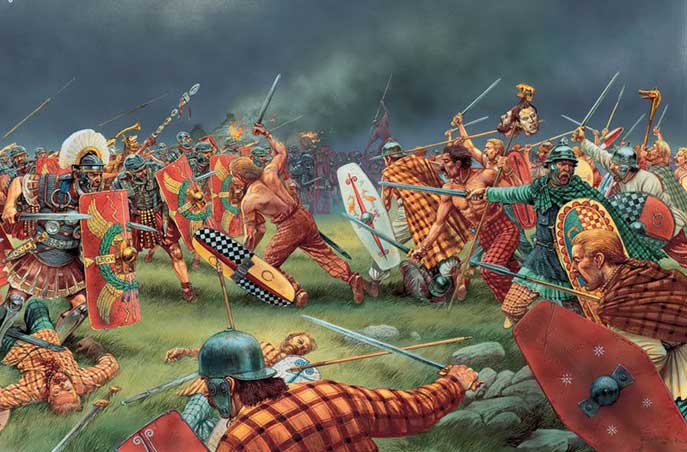
The size of an armed force is an important metric, but only if other factors (morale, training, equipment, terrain etc) are taken into account. The Battle of Watling street pitted 10,000 Roman legionnaires against 100-230,000 British rebels, if numbers were the supreme metric then the Romans should've lost, yet they utterly massacred the British despite the numerical disadvantage (it actually helped). The Romans only had about 60,000 legionaries at any one time, which was a fair sized army for a medium sized kingdom but for an empire it's puny. Rome only needed 60,000 legionaries to defend and expand its empire (Though it also had a far larger number of lower quality auxiliaries from its allies and subjugated people), contrast with Achaemenid Persia who launched an invasion of ancient Greece that numbered close to a million, yet failed, and it still had most of its forces locked up in garrisons back in Persia. The quality of the soldiers and their commanders can play a far more important role than sheer numbers, other factors also play a part. For example If China and Russia had a conventional war right now, I'd expect Russia to win simply because they have more experience and a more advanced indigenous military industrial system, even though China can easily outnumber Russia in ground troops.


What this also means is that statements along the lines of "Military X has Y soldiers" is without other metrics is a mostly useless as a way of assessing a militaries strength (especially when their are significant technological and organizational differences, which exist today and can be expected for the short to mid future) unless both sides soldiers are equal, something which is infrequent during turbulent times and recent history. The quality of the soldiers, their leaders and equipment are vital in determining their strength, so is the type of warfare their fighting and how well suited they are to it. Other factors like terrain, surprise, morale, logistics etc also need to be taken into account. Sometimes a large force is useful, other times a small force is useful, it depends on the context. So even through New Zealand's army is small, its an elite force which allows it to have a measure of influence (easier logistics and a larger impact for a given force size). Timor's forces are also small, but since their going to fight defensively most of the time, that's not a huge problem, especially if they leverage it with the use of mines and area denial tactics. The effect of technology on these factors is also important, some technologies favour some factors over others or differing force sizes and so on. The wide range of interacting factors and how they play out is why this is barely an educated guess, so much is uncertain.

War is not one singular thing, but instead a very broad category of a specific type of political violence, most of its forms haven't been seen (outside of Africa) in recent history but they'll return. This is fairly important because different soldier types (professional, militia, conscript etc) are better at different conflicts. Roman legionaries (composed of heavy infantry and artillery) were good at high intensity warfare, when fighting low or medium intensity warfare other troops (the auxiliaries composed of light infantry, cavalry and archers) were used and are more effective. The modern equivalent would roughly be a fully mechanized army versus large infantry armies. We can first divide the various wars into defensive or offensive (since were dealing with Islands this is a fairly clean cut definition), for an invading army their fighting an offensive war while the defenders are obviously fighting a defensive war only, counterattacks won't happen as often (think when Rome attacked Carthage to draw Hannibal out of Italy). After that you have differences in scales, national (e.g. invasions), strategic (fighting over specific territory for example), military skirmishes and low intensity (raids or small armed bands). Certain technologies (like submarines) would only be used in certain war types and some troops are more efficient (taking into account training and equipment costs as well) at certain types and scales of warfare. Small ships are immensely important for any sort of naval conflict, so they can actually matter more than if a nation has capital ships. Militia are normally crap on the offensive, but on the defensive they can be as effective (if conditions are right) as professional troops. The technology used also effects each scale differently, but since the level of difference isn't great enough (no ones bringing bows to a gunfight) that's not a huge factor.


Today professional soldiers are the most common type of warriors, with conscripts in some countries and the occasional forms of militia, but in the post overshoot world a far greater variety of soldiers are likely to exist. Militia that are tied to specific locations and are part law enforcement will likely return, so will seasonal or semi-professional warriors. The difference between soldiers and warriors would also be an important factor and is requires a good examination at some point. Others will appear, similar to most barbarian armies, in which its a lifestyle choice, though guns have made it unlikely to be as common as before and adhoc armies suffer similar problems for most military uses. Guns and a few other military advancements have changed the likely mixtures somewhat, organization and logistics carry far more weight than they used to for example. Certain soldier types are better at certain things, militia are generally better at defensive warfare (for the same cost) than the others while a professional army (like the legions) is very good at high intensity warfare. Note that here I'm talking about their effectiveness in terms of cost (money, resources, time, organization etc), not per soldier. If the only conflicts are seasonal raids, border skirmishes or armed looting, then either seasonal warriors or as a lifestyle choice and militia make more sense compared to modern professional soldiers. Technology also affects how well these soldier types work, it takes far less time to train someone to use a gun than a sword or bow and radios allow far greater coordination while enhancing defensive mobility, both enhancing militias while lowering the effectiveness of most traditional raider types. But disciplined raiders could use radios to greatly enhance their effectiveness and initiate more complex deception operations to overcome defenses. These are fairly dynamic situations and will continuously change over time.

Certain technologies would only be used in specific situations/wars. After all, if it takes biofuel to run or some other limited or expensive resources, then it will only be used when appropriate. Vehicles and heavy artillery are likely to be used only at medium to high intensity (light artillery such as mortars would probably be common), but Capital ships and subs are likely to only be really used in the big wars. Airplanes of the highly efficient (and thus small) variety are likely to be used in most conflicts for recon, after all that's what they were originally for and they should excel in that field even if they're turboprop. In any other role, they'll be used occasionally in the medium intensity wars and definitely in the high intensity wars. This also depends on if its a defensive or offensive war and which countries are fighting. Obviously for an invasion of New Guinea submarines aren't likely to play a major role and both artillery and guns are incredibly powerful on the defensive (tactically). The last point is important, that's why WW1 was so different from WW2, WW2 had very powerful offensive weapons (like tanks) to overcome the powerful advantage of guns on the defensive. However, just because that trait is likely to be dominate doesn't mean that wars will be less likely, their are a variety of ways around that trait and it only applies tactically, Helmuth Von Moltke was one of the first people to realize this trait and he successfully fought 3 offensive wars.

What the wars are fought over, trade routes, wealth, coastal or inland territory will determine how the militaries are structured and used. Carthage could rely heavily on its navy because it only conquered coastal territory (to control trade), while Rome was primarily a land power and therefor put its might into the legions. Wars fought in areas were barely anyone lives or are nomadic aren't going to have militia and might not actually have defensive elements at all. If the war's goals are small enough, certain technologies won't be used because the benefit of winning is less than the cost of using them. And so on, if the war isn't a total one, the objectives will greatly affect the means used to achieve them. The saying the ends justify the means is as inaccurate here as elsewhere (by the way Machiavelli never wrote these words, it was a mistranslation) for much the same reason Machiavelli said (this is what was mistranslated) "one must think of the final result". Different means have different affects, even when they achieve the same goal. "War is just an extension of policy", Clausewitz, so these goals will be link to domestic politics as much as foreign policy and will have to take into account it's impacts on the relevant countries.

The system engineering approach to this problem is actually "The system exists to deliver capability,
the end justifies the means"
(from Creating systems that work). The way this works is that you completely disregards how to do whatever it is (the means) and first define what the ends (or capabilities) wanted are. Only then do you choose what means to use since you can actually match them up properly.

 Here the Archdruid talks about gasoline warfare, which allows a conquest of another nation, same as traditional warfare does. But since they are different means they cause different effects (ends), Gasoline warfare is quicker and shreds an opponents government and military structure but resistance is almost inevitable while traditional warfare is slower, generally costlier and involves more major battles, but if you succeed you don't often get a sustained insurgency (periodic rebellion is another matter). The end (this doesn't just include the stated goals) you want determines the means used and the means available influence the ends that are aimed for, neither of them is dominant. Here one of the likely sources of conflict is trade, important ports and strategic islands (which means of the choice of gasoline or traditional war, gasoline war has the advantage).

Due to the fact that biofuels have to be produced out of agricultural production, but they can be stored, production is likely to be low and biofuel storage facilities will be strategic targets. So how much a nation prepares/plans for war will affect how any particular war is fought. If the war was foreseen/planned and stockpiles are available, then vehicles and aircraft will be used. If a war on the other hand is sudden or unexpected (by say 3-5 years) then the stockpiles might not be used or there won't be enough for the heavy use of vehicles (up until the later parts of the war if its a long one). Large strategic reserves are likely to be kept because of this and it works against continuous large (or medium) scale warfare as it could easily take decades to restock the biofuel and other supplies. And if a country is planning a war and suddenly another war breaks out, it has to decide whether to run down its stockpiles and potentially not have enough to fight the planned war or not to use its stockpiles and suffer a disadvantage. Other important and existential decisions exist. So how prepared a country is for war and what long term plans it has will greatly affect each war and both how its fought (the means) and what for (the ends). Paranoia could easily be the response to this situation, but countries could easily cycle (due to the stockpile levels) through periods of paranoia and aggressiveness.

So now that's out of the way, in our scenario what are the likely power balances, grand strategies and reactions of the various powers could be. Also, remember that every actor in this scenario is an Island or archipelago.

New Zealand: Is the most isolated of the powers and so its not likely to ever face any existential threats of invasion, its biggest potential threat is Australia and that's less than most have been throughout history and is likely solved by being a key Australian ally. The threats it faces are more to do with access to trade routes than any thing else. So it's grand strategy is either going to be similar to Australia's current one, in which it basically buys favour, support (like safe trade routes and such) and peace, in exchange for military support (likely to Australia) or  it could adopt 'armed neutrality' (like Sweden). At this point in time (for the scenario) we'll assume the former, but it would switch between the two as both circumstances and culture change. So its military would be a small elite force, with a limited navy (at least partly bought from Australia). Since its so isolated, it won't really react to big wars, large buildups and such because they aren't in any danger as long as Australia is their ally, since there's no other good invasion launching point.

Australia: Similar to New Zealand in isolation while also being fairly close to every one else. As I've pointed out before, Australia's population is distributed on the sides facing away from Asia and the north coast isn't important when seen through the lens of population. And since the main trade route will be along the clipper route, the other targets for that war goal are New Zealand (who is likely to be peaceful) for the simple reason that I don't think Australia will invade (or vis versa) southern Africa or south America, though that would be an interesting war from a logistics perspective. So the main conflict would be over control of the north coast's strategic ports (especially if the Ghan stays around), trade routes to the north and island territories, this could mean conquering small islands inside the Indonesian archipelago for the purposes of anti-piracy or small naval bases.


So Australia's grand strategy would depend on the relative importance of the northern trade routes and Asia's wealth and the hostility of the other powers. For this we'll assume the trade routes to Asia are profitable (maybe the Suez and Panama canals are gone) and the other powers are hostile. In this case its grand strategy would be a mixture of defensive, strategic allies (Timor and New Guinea) and the holding of strategic island ports. It would care about major wars, but since its population centres aren't in any major danger, not as an existential threat but a threat to its wealth and influence (which can have a similar reaction).

Malaysia: Has the only land border (with Thailand) and is located on the strategic Malacca strait. Its not likely to play a large part in any wars or grand actions, its goal is the control of the strait and the economic power that would give it. So its grand strategy is going to be highly defensive and focused on keeping the strait clear, while also being able to disrupt it. So fights between it and Indonesia will be quite common (not necessarily violent fights, many would likely be standoffs and diplomatic), also because their incredibly close, raids, anti piracy operations or actual piracy (its a fine tradition to engage in state sanctioned piracy) would make up the bulk of the conflicts. It would care greatly about major wars and events, after all they'll disrupt the trade fleets they extort, but its not likely to have much influence on them unless it's protracted.

Borneo & Indonesia: Both Borneo and Indonesia are in similar enough circumstance that what applies to one applies to the other. They are the ones that are likely to invade other countries (particularly each other) and would be constantly fighting over strategic ports. Since they have a fairly good navy and are both Islands, they would fight naval wars fairly often and over strategic ports (more so than everyone else). Since they're also in the middle, they are in the most interesting strategic situation and would consequently have a very diverse grand strategy. Defensive to protect their core ports and holdings, aggressive to cut of their enemies trade and hold strategic ports and cautious because their both surrounded by potentially hostile powers. Since these are the powers that are likely to start a major war, they'll obviously react the most to any that happen.

New Guinea & United Timor: Similar to the above, New Guinea and United Timor are in very similar circumstances. Both are relatively poor, mountainous and have a crap navy. The obvious response to this is to use the mountainous terrain to their advantage, negate the others technological advantage as much as possible and have an extremely defensive grand strategy. Minefields would be ready to quickly lay in ports if needed, lots of mountain forts and retreats and so on. The fleet would act opportunistically and to deny the enemy safe use of the seas and would avoid open battles. The ultimate goal is to be something like Switzerland and be too tough to bother invading. Major wars and events would just make them batten down the hatches and wear the storm out, through they could have an opportunistic strategy in place if the wars are destructive enough (loot the survivors).